
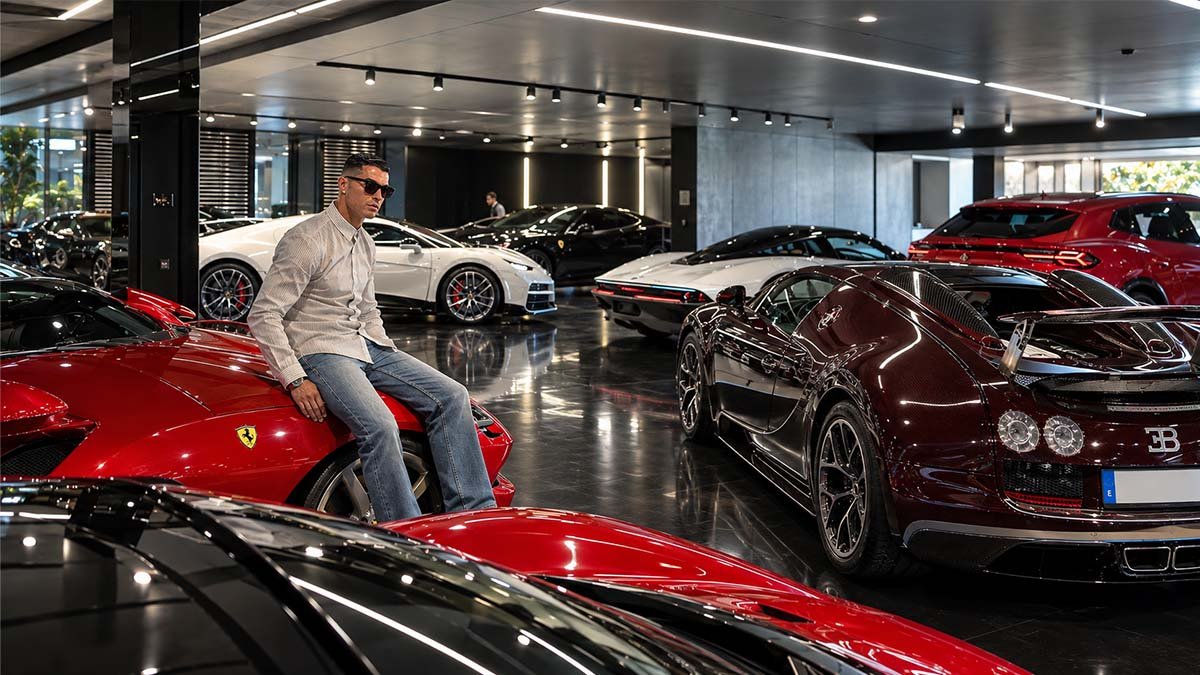
Cristiano Ronaldo’s car collection brings together some of the most exclusive machines in the automotive world, including powerful Bugattis, limited-production Ferraris, high-performance McLarens and luxury vehicles built for everyday travel. For the Portuguese football superstar, whose career has spanned Manchester United, Real Madrid, Juventus and Al-Nassr, the garage reflects decades of earnings, an interest in performance cars and access to models that ordinary buyers cannot simply order from a showroom.
In August 2026, Ronaldo gave fans an unusually clear look at several vehicles in his private garage through photographs shared on Instagram with the caption “My toys.” Automotive publications identified cars including the Bugatti Centodieci, Ferrari Daytona SP3, Ferrari Monza SP1 and Bugatti Chiron among the machines shown. The photographs offered a valuable snapshot of his collection, although they did not establish a complete inventory of every vehicle he owns. (Carscoops, August 2026; British GQ, August 2026)
The collection is particularly interesting because its value cannot be explained by horsepower alone. Limited production, specialist engineering, brand heritage and the difficulty of acquiring certain models all influence the prices of these cars. A Bugatti built in a run of just 10 examples occupies a different market from a luxury SUV, even if both belong in the same billionaire-style garage.
Here is a closer look at the most notable cars associated with Ronaldo, what makes them special and what their reported prices tell us about his approach to collecting.
How Much Is Cristiano Ronaldo’s Car Collection Worth?
There is no publicly verified, comprehensive valuation of Ronaldo’s entire garage. Estimates published by automotive and celebrity news outlets vary considerably, partly because they include different vehicles and use different assumptions about prices, customisation and current market values.
The August 2026 photographs prompted estimates of approximately £20 million to £22 million for the vehicles featured or identified in the coverage. Those figures should be treated as media estimates rather than an independently audited valuation. They also should not be confused with the value of every car Ronaldo may own. (City A.M., August 2026; GOAL, August 2026)
The distinction matters. A manufacturer’s original price does not necessarily represent a vehicle’s present value. Rare hypercars can command substantial premiums when demand exceeds supply, while other luxury cars may depreciate after purchase. Import duties, registration, taxes, bespoke specifications and the country in which a car is sold can also change the final cost.
For that reason, there is no sound basis for assigning one definitive dollar figure to Ronaldo’s entire collection without a complete list of vehicles and reliable current valuations.
1. Bugatti Centodieci
The Bugatti Centodieci is one of the most exclusive cars associated with Ronaldo. Its name means “110” in Italian, a reference to Bugatti’s 110th anniversary, and its design draws inspiration from the EB110, the celebrated supercar of the 1990s.
Bugatti limited production to just 10 cars worldwide. According to the manufacturer’s official specifications, the Centodieci uses an 8.0-litre W16 engine with four turbochargers, producing 1,600 PS. It can accelerate from 0 to 100 km/h in 2.4 seconds and has a stated top speed of 380 km/h. Bugatti confirmed that the tenth and final example had been delivered in 2022. (Bugatti Newsroom)
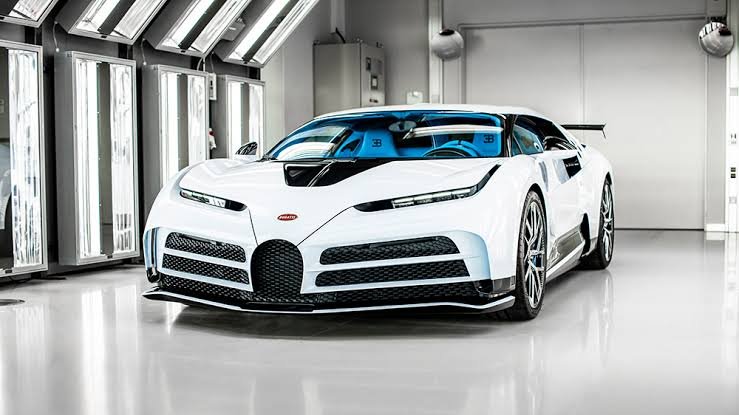
The Centodieci’s significance extends beyond its performance. With only 10 examples produced, acquiring one requires access to an extremely limited allocation. Its styling also deliberately connects modern Bugatti engineering with the EB110’s history, giving the car an identity beyond sheer speed.
Media reports have associated Ronaldo with a white Centodieci, and the vehicle featured in coverage of his August 2026 garage reveal. Bugatti’s production information confirms the model’s rarity and specifications, although the manufacturer’s announcement is not itself proof of Ronaldo’s individual purchase.
Reported price: Approximately €8 million before tax at launch, with some later media estimates placing the car’s value considerably higher. The original manufacturer price and a current resale valuation are not interchangeable.
For collectors, the Centodieci combines three powerful factors: restricted production, historical significance and exceptional engineering. Those characteristics explain why it commands so much attention even within a garage full of expensive cars.
2. Bugatti Chiron
The Bugatti Chiron represents a different side of the brand. While the Centodieci is a limited-production tribute to Bugatti’s past, the Chiron was developed as a flagship hypercar combining extreme performance with the refinement expected of a luxury grand tourer.
Ronaldo’s connection with the Chiron is documented by Bugatti itself. In February 2017, the company announced that he had driven the car in Madrid shortly before customer deliveries began. Bugatti described the session as a final evaluation of the 1,500 PS supercar. This establishes his involvement with the model, while separate automotive reporting has associated Chirons with his collection. (Bugatti’s official announcement)
The standard Chiron’s 8.0-litre quad-turbocharged W16 engine produces 1,500 PS. Its immense output is delivered through an advanced all-wheel-drive system, allowing the car to put its power to the road more effectively than a conventional rear-wheel-drive sports car.
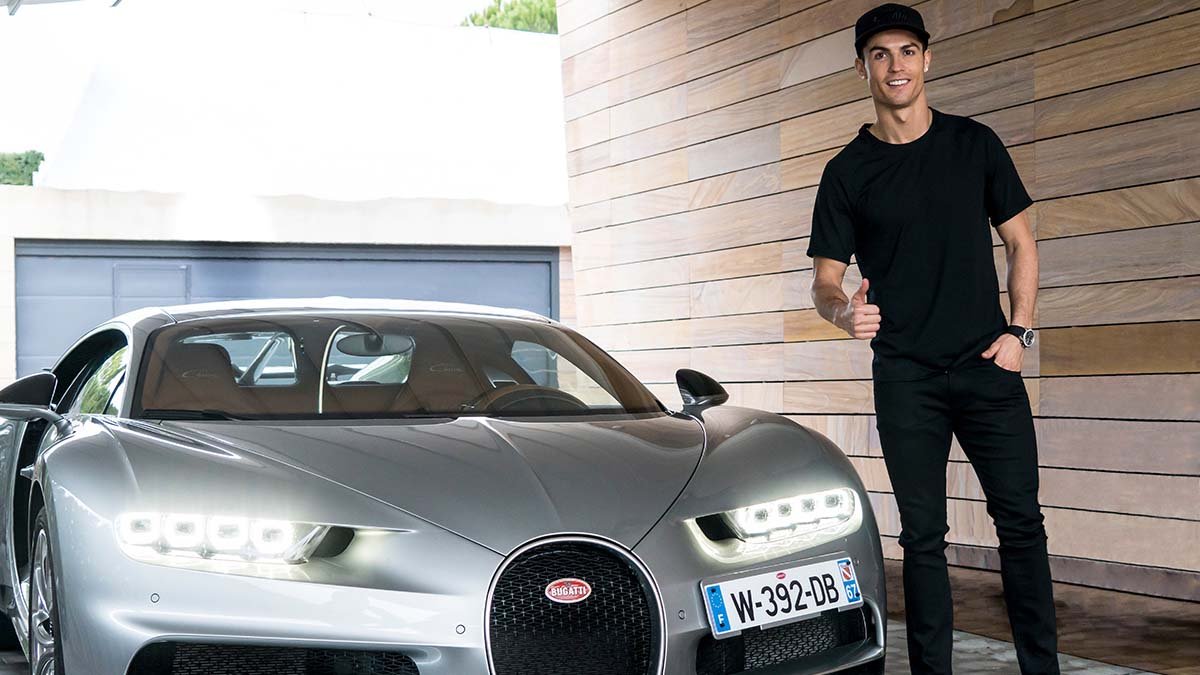
The engineering challenge is not simply generating power. A car capable of sustained high-speed driving needs carefully managed cooling, stable aerodynamics, powerful brakes and a chassis that remains predictable under extreme loads. Bugatti designed the Chiron around that combination of performance and control.
Reported price: Original prices varied by version and specification, with the Chiron positioned in the multi-million-euro segment. Used examples can trade at different values depending on mileage, history and configuration.
The Chiron also illustrates why Ronaldo’s collection cannot be assessed solely by counting cars. A flagship model from a specialist manufacturer represents a distinct engineering achievement, even alongside vehicles that cost several times less.
3. Bugatti Veyron Grand Sport Vitesse
Before the Chiron, the Veyron established Bugatti’s modern reputation for combining extraordinary speed with luxury. The Veyron Grand Sport Vitesse brought that formula to an open-top configuration, retaining the model’s powerful W16 engine while allowing occupants to experience the car with the roof removed.
The Vitesse version produces 1,200 PS from an 8.0-litre quad-turbocharged W16 engine. Its engineering addresses a difficult combination: the structural requirements of an open-top vehicle and the stability needed for exceptionally high speeds.
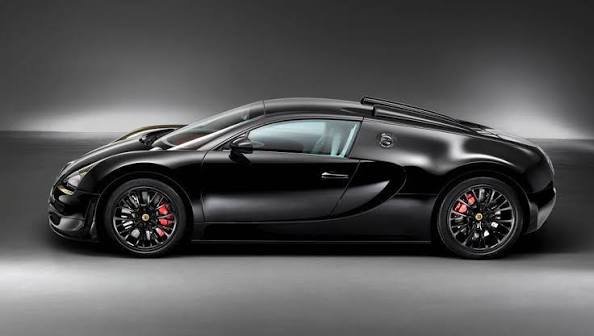
The Veyron is also historically important because it helped establish the modern hypercar category as a space where manufacturers could compete on engineering complexity, not merely styling or acceleration. Bugatti’s willingness to develop an extraordinarily powerful road car with luxury-car refinement influenced how later flagship models were conceived.
Automotive reports have repeatedly associated the Grand Sport Vitesse with Ronaldo, and the model was included in coverage of his collection. Exact current ownership status and market value, however, cannot be established from model specifications alone.
Reported price: Original pricing depended on specification and market, while present values depend heavily on condition, mileage and provenance.
For a collector, the Veyron has an advantage that newer cars cannot immediately reproduce: historical standing. It belongs to the generation of vehicles that made modern Bugatti synonymous with four-digit power figures and extraordinary engineering.
4. Ferrari Daytona SP3
The Ferrari Daytona SP3 offers a contrast to the Bugattis. Rather than relying on a quad-turbocharged W16 engine, it uses a naturally aspirated V12, an increasingly distinctive choice in a market where turbocharging and electrification have become more common.
Ferrari developed the Daytona SP3 as part of its Icona series, which draws on the company’s historic racing cars while using modern engineering. The design references the mid-rear-engined Ferrari sports prototypes that helped establish the marque’s motorsport reputation.
According to Ferrari, the Daytona SP3 has a 6.5-litre naturally aspirated V12 producing 840 cv. Its original production allocation was limited to 599 examples. Ferrari’s official figures give a 0–100 km/h acceleration time of 2.85 seconds. (Ferrari’s official Daytona SP3 announcement)
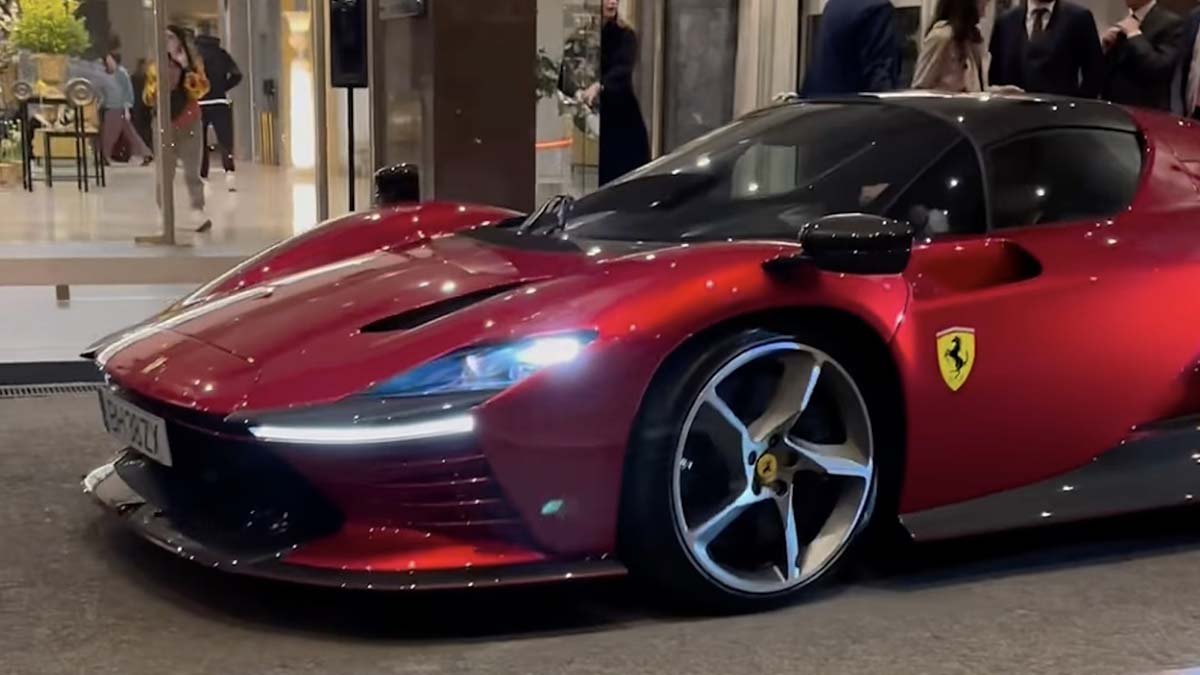
The engine’s character is central to the car’s appeal. A naturally aspirated V12 builds power differently from a turbocharged engine, with its response, sound and ability to rev forming part of the experience. For buyers at this level, those characteristics can matter as much as a headline acceleration figure.
The Daytona SP3 appeared in photographs of Ronaldo’s garage shared in August 2026. Its presence places him among the owners associated with one of Ferrari’s more exclusive recent road cars.
Reported price: The original allocation was priced in the high six figures in US dollars, depending on market and taxes. Secondary-market values can be substantially different, but any claim about a current premium requires comparable sales evidence.
The Daytona SP3 is a good example of how a car can be valuable for reasons beyond outright speed. Its limited allocation, naturally aspirated V12 and direct connection to Ferrari’s racing heritage help distinguish it from more widely available performance cars.
5. Ferrari Monza SP1
The Ferrari Monza SP1 is one of the more unusual cars associated with Ronaldo. Its design recalls historic barchetta racing cars, with a single-seat layout and an open cockpit that prioritises the driver’s experience over conventional comfort and practicality.
The SP1 belongs to Ferrari’s Icona family, alongside the two-seat Monza SP2. The cars reinterpret classic racing-inspired forms using modern materials and engineering. Their limited availability also makes them very different propositions from a regular production Ferrari.
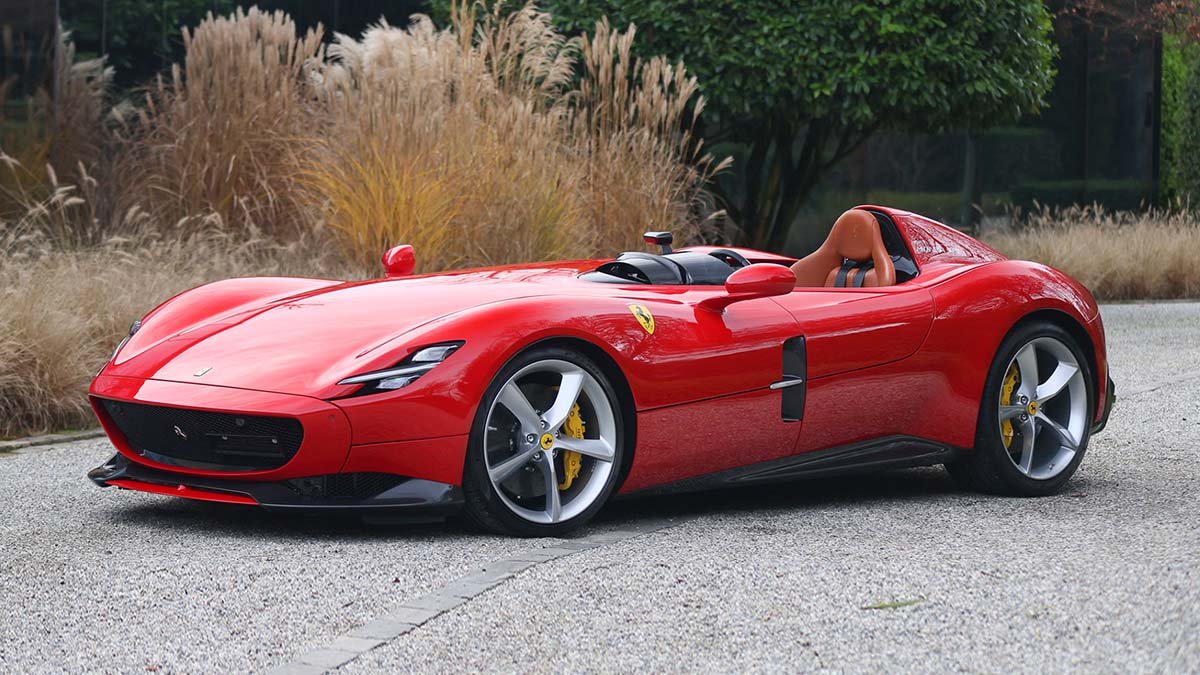
The Monza’s appeal is not based on having the highest top speed or the most complex powertrain in Ronaldo’s garage. It is about a particular interpretation of a sports car: lightweight visual drama, an exposed driving environment and a strong connection to Ferrari’s competition history.
Ferrari’s Icona programme is aimed at buyers who already have access to high-performance cars and want something more specialised. A Monza SP1 serves a collector who values design, rarity and the experience of driving a distinctive machine.
Reported price: Original pricing was in the seven-figure-dollar range in some markets, before taxes and individual-market costs. Actual resale values depend on specification, condition and the limited supply of comparable cars.
The SP1’s single-seat configuration also demonstrates that this collection is not purely about buying the fastest available model. Some cars are designed around a more specific experience, and that specialisation is part of their appeal.
6. Ferrari Purosangue
The Ferrari Purosangue represents a more practical side of Ronaldo’s reported collection. Unlike the low-slung Daytona SP3 and Monza SP1, it has four doors, four seats and the body style of a high-performance luxury SUV.
Ferrari made a significant departure from its traditional sports-car format with the Purosangue, while retaining a naturally aspirated 6.5-litre V12 engine. The company quotes 725 cv and a 0–100 km/h time of 3.3 seconds. Its combination of performance, passenger space and ground clearance makes it more versatile than the specialised two-seat cars in the garage.
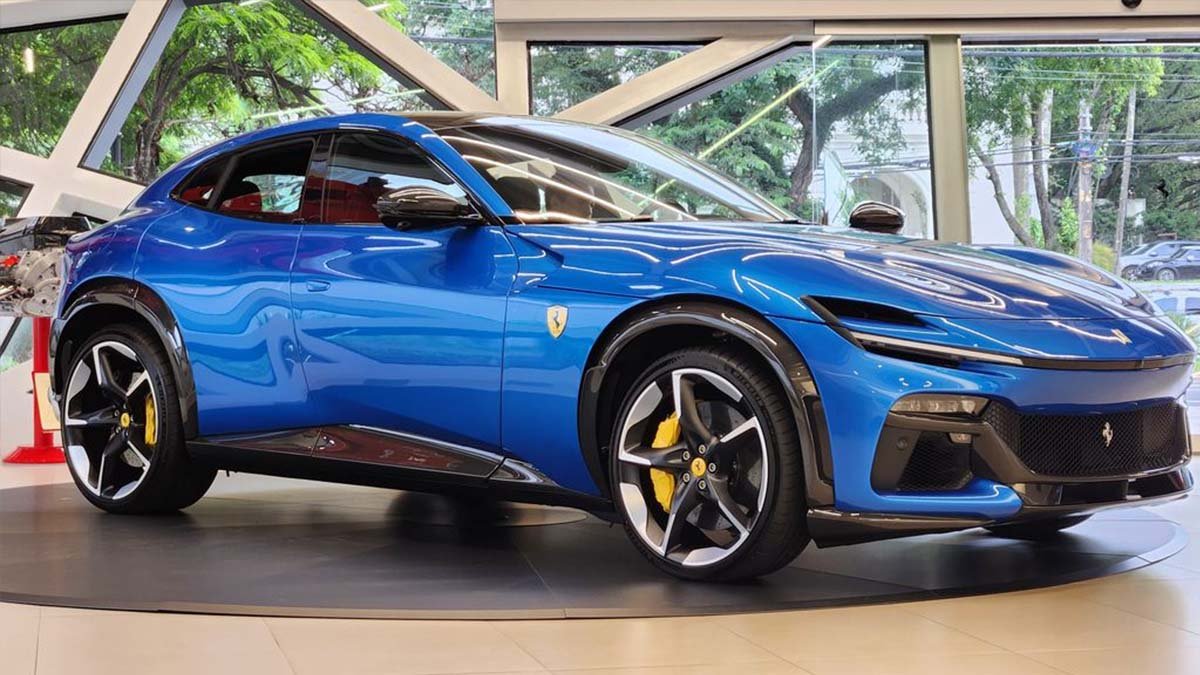
That versatility helps explain the appeal of high-performance SUVs among wealthy collectors. A hypercar can be inconvenient for longer journeys, carrying passengers or navigating rougher roads. A vehicle such as the Purosangue offers a broader range of uses without abandoning the performance associated with Ferrari.
Automotive coverage of Ronaldo’s August 2026 garage photographs identified a Purosangue among the vehicles shown, although the identification of partially obscured cars in photographs should be treated cautiously.
Reported price: The original price was above $400,000 in some markets before options and taxes. Actual costs depend on market, specification and availability.
The Purosangue adds something important to Ronaldo’s garage: a vehicle that can serve a practical role while retaining the prestige and engineering of a specialist sports-car manufacturer.
7. Ferrari 599 GTO
The Ferrari 599 GTO is another model widely associated with Ronaldo. Based on the 599 platform, it was developed as a more focused, performance-oriented version of Ferrari’s front-engined V12 grand tourer.
The 599 GTO uses a naturally aspirated 6.0-litre V12 producing approximately 670 cv. Its combination of substantial power, rear-wheel drive and performance-focused engineering made it one of the most extreme road-going versions of the 599 generation.
Unlike the Daytona SP3, the 599 GTO was not conceived as part of Ferrari’s later Icona programme. Its appeal instead comes from a particular period in the company’s history, when large naturally aspirated V12 engines remained central to its flagship road cars.
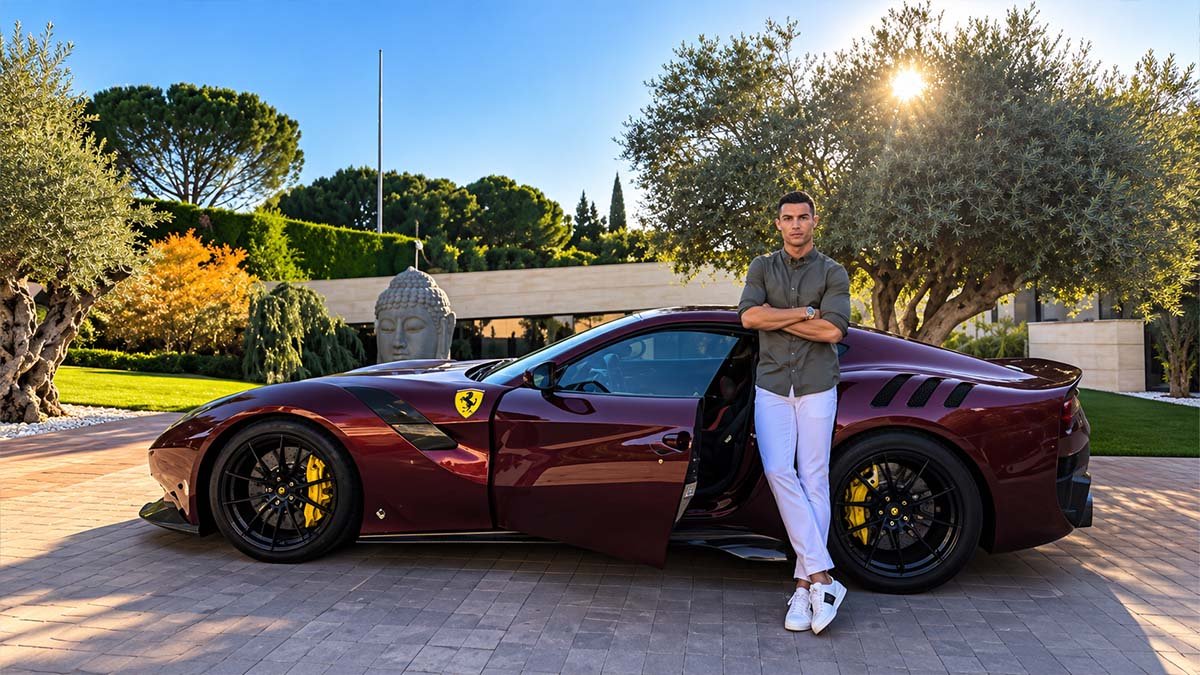
That distinction matters for collectors. Newer limited editions often attract attention because they are rare from the moment they launch. Older performance models can develop a following as enthusiasts recognise their engineering, driving characteristics and place in a manufacturer’s history.
The 599 GTO has frequently appeared in media lists of Ronaldo’s cars, and it was identified in reporting on the 2026 garage photographs.
Reported price: Original pricing was in the hundreds of thousands of dollars, while current values depend on condition, mileage, service history and market demand.
The car is a reminder that a valuable collection does not need to consist entirely of the newest models. An earlier performance Ferrari can offer a different experience from a modern hybrid or hypercar, even when its headline figures are less dramatic.
8. Mercedes-AMG ONE
The Mercedes-AMG ONE is one of the most technically ambitious road cars associated with Ronaldo. Its defining feature is a hybrid powertrain derived from Formula One technology, bringing elements of modern racing-engine development into a road-legal vehicle.
The powertrain combines a 1.6-litre turbocharged V6 engine with electric motors. The system produces a combined output of more than 1,000 PS, with performance supported by advanced aerodynamics, a lightweight structure and sophisticated energy management.
This is a different engineering philosophy from Bugatti’s W16. Bugatti’s traditional flagship approach centres on enormous combustion-engine output and high-speed stability. The AMG ONE uses electrification and a compact, highly developed combustion engine to pursue performance through a system more closely related to contemporary racing technology.
The challenge is substantial. A Formula One-derived powertrain must operate within road-car requirements for reliability, emissions, cooling, usability and servicing. Those requirements make the project more complex than simply fitting a racing engine into a production body.
The AMG ONE is widely reported among Ronaldo’s vehicles, but the existence of the model and its technical specifications should be distinguished from independent confirmation of the ownership of a particular example.
Reported price: The original price was in the multi-million-dollar range, with final costs affected by taxes and market conditions.
For a collector interested in engineering, the AMG ONE represents a different kind of exclusivity. Its attraction lies in the technology and development work required to bring racing-derived performance to a road car.
9. McLaren Speedtail
The McLaren Speedtail occupies a distinctive place in the reported collection. Designed as a high-speed hybrid grand tourer, it prioritises aerodynamic efficiency, power and long-distance performance rather than the track-focused character associated with some of McLaren’s other models.
Its hybrid system combines a twin-turbocharged V8 with electric assistance. McLaren quotes a maximum speed of 403 km/h, making the Speedtail one of the fastest road cars the company has produced.
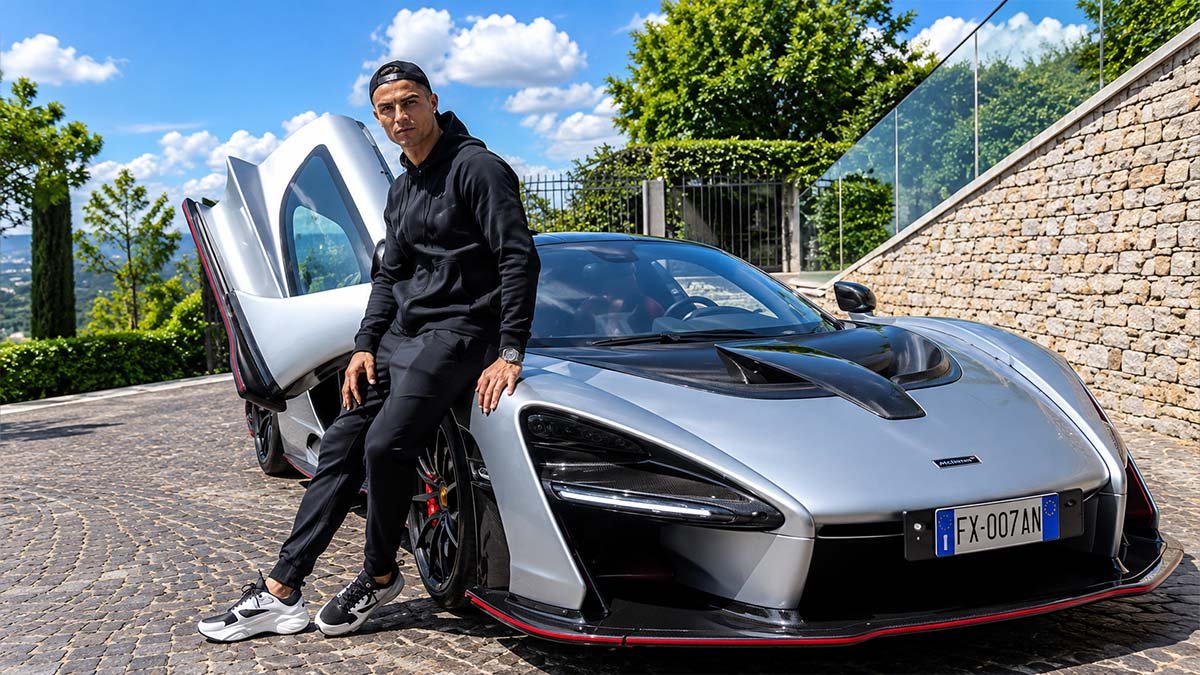
The car’s long, tapered body is central to its design. Rather than relying only on large wings or aggressive exterior features, the Speedtail uses a streamlined shape intended to reduce aerodynamic drag at high speed. Its unusual three-seat cabin, with the driver positioned centrally, also draws inspiration from McLaren’s historic F1 road car.
McLaren limited Speedtail production to 106 examples. That number connects the car to the 106 McLaren F1 road cars produced in the 1990s, giving the Speedtail a clear place within the manufacturer’s history.
Reported price: The original starting price was approximately £1.75 million before options and taxes. Current values can vary according to specification and availability.
The Speedtail differs from a dedicated track car because its concept is built around rapid road travel. For a collector with access to many high-performance vehicles, that distinct purpose can be as valuable as outright acceleration.
10. McLaren Senna
The McLaren Senna takes a contrasting approach. Named after Brazilian Formula One champion Ayrton Senna, it was developed with an emphasis on track performance, low weight and aerodynamic downforce.
Its 4.0-litre twin-turbocharged V8 produces 800 PS. The car’s bodywork incorporates extensive aerodynamic features, including a large rear wing, to help generate downforce and improve stability under hard cornering and braking.
The Senna’s design can look extreme compared with a conventional supercar, but the shape follows its intended purpose. Aerodynamic load, braking performance and predictable handling matter more on a circuit than the luxury and visual restraint expected of a grand tourer.
McLaren’s limited production and the model’s association with one of Formula One’s most celebrated drivers have helped establish its status among modern performance-car collectors.
Reported price: Original prices were around the $1 million mark before options and taxes, depending on the market.
The Senna complements the Speedtail because the two cars are designed around different priorities. One focuses on high-speed grand touring; the other is more directly oriented toward track performance. That variety gives a collection greater depth than simply owning several cars with similar power figures.
11. Rolls-Royce and Bentley
Ronaldo’s collection is also associated with Rolls-Royce and Bentley models, including the Rolls-Royce Cullinan, Phantom and Bentley Flying Spur. These vehicles serve a different purpose from the Bugattis and Ferraris.
A Rolls-Royce is engineered around comfort, cabin refinement and personalisation. The Cullinan provides SUV practicality, while the Phantom is a flagship luxury saloon. Bentley’s Flying Spur combines a high-performance powertrain with the passenger comfort expected of an expensive executive car.
Reports have also documented a Rolls-Royce presented to Ronaldo by his partner, Georgina Rodríguez, as a Christmas gift in 2022. The exact model and details should be checked against the original reporting before being treated as definitive.
These vehicles make sense in a garage that includes specialised supercars. The owner does not need every car to deliver the same experience. A luxury saloon or SUV can be better suited to passenger travel, formal occasions and daily transport than a low, stiffly sprung hypercar.
Reported price: New prices vary substantially by model, bespoke options, local taxes and specification. There is no single price that accurately represents every Rolls-Royce or Bentley associated with Ronaldo.
The broader point is that luxury ownership is not solely about speed. Cabin comfort, materials, privacy and the ability to tailor a vehicle to individual preferences are also major parts of the premium-car market.
What the Collection Says About Ronaldo’s Automotive Taste
Taken together, the cars associated with Ronaldo show several recurring preferences.
First, he has access to highly exclusive models. The Centodieci’s 10-car production run and the Daytona SP3’s original 599-unit allocation demonstrate how limited availability can become a major part of a vehicle’s appeal.
Second, his collection spans different engineering philosophies. The Bugattis use large quad-turbocharged W16 engines; the Daytona SP3 relies on a naturally aspirated V12; and the AMG ONE combines a small turbocharged engine with electric motors. The Speedtail takes yet another approach through hybrid power and aerodynamic efficiency.
Third, the collection includes both specialist performance cars and vehicles suited to everyday travel. The Senna and Monza SP1 are highly specialised, while the Purosangue, Cullinan and Flying Spur offer more flexibility.
This mix is consistent with the habits of serious collectors who want more than one kind of driving experience. It does not, by itself, prove that Ronaldo buys cars as investments or that every vehicle appreciates in value.
Are Ronaldo’s Cars Investments?
Some rare vehicles can appreciate, particularly when production is limited and demand remains strong. But scarcity alone does not guarantee a profit.
An owner’s eventual return depends on the purchase price, taxes, maintenance, storage, insurance, mileage, condition and the availability of willing buyers. A limited-edition vehicle may command a premium in one market and a smaller premium in another. A car can also lose value even if only a few examples were built.
For an owner at Ronaldo’s level, the financial calculation may differ from that of someone buying a car primarily for resale. Enjoyment, personal interest, brand relationships and the experience of owning an unusual vehicle can all be part of the decision.
Without purchase records, resale transactions and information about running costs, it would be misleading to describe his entire garage as a profitable investment portfolio.
Separating Confirmed Cars From Online Rumours
Celebrity car lists often combine direct evidence, credible reporting, old photographs and speculation. That makes ownership claims difficult to compare.
Ronaldo’s own social-media photographs provide useful evidence of cars displayed in his garage at a particular time. Interviews, documented deliveries and reporting from established automotive publications can add context. Manufacturer announcements are particularly useful for verifying technical specifications and production numbers.
However, these sources answer different questions. A manufacturer can confirm that a Centodieci has 1,600 PS and that only 10 were built without confirming who owns a particular example. A photograph can show a car beside Ronaldo without establishing whether he owns it, borrowed it or has since sold it.
The same caution applies to claims that he owns the one-off Bugatti La Voiture Noire, a particular LaFerrari or a newly announced model. These claims should not be repeated as facts unless reliable evidence supports them.
A responsible account of the Cristiano Ronaldo cars collection should therefore distinguish between vehicles directly shown in his garage, cars consistently documented by reputable reporting and models that appear only on unverified lists.
That approach is more useful than presenting a long inventory with no explanation of where the information came from.
The Bottom Line
Cristiano Ronaldo’s car collection stands out because it brings together rare hypercars, limited-production Ferraris, racing-inspired McLarens and luxury vehicles from established premium manufacturers. The Bugatti Centodieci is a particularly striking example of scarcity and engineering, while the Daytona SP3 and Monza SP1 offer distinct interpretations of Ferrari’s heritage. The Mercedes-AMG ONE and McLaren Speedtail show how hybrid technology can serve different performance goals.
The exact size and total value of the collection remain difficult to establish from public information. Media estimates can offer a useful indication of scale, but they should not be mistaken for an audited valuation or a complete ownership register.
What the available evidence does show is a collection built around variety: extreme speed, specialist engineering, limited production and luxury. That combination explains why Ronaldo’s garage continues to attract attention from football fans and automotive enthusiasts alike.
